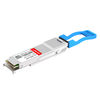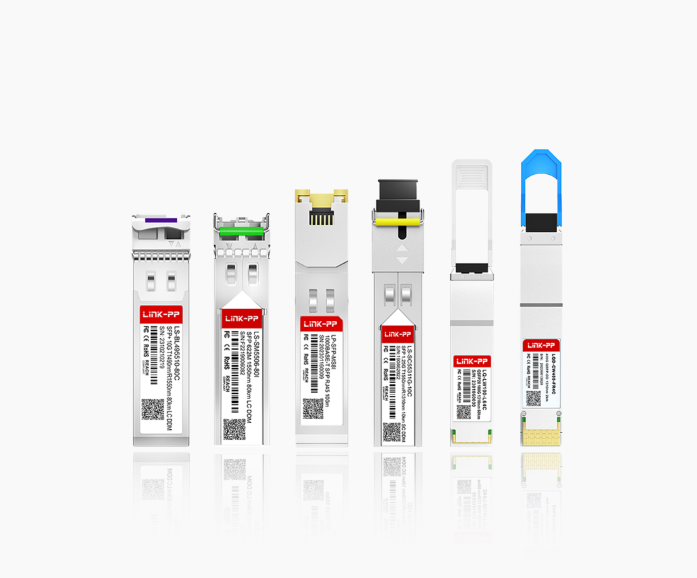
The rapid expansion of digital services and the constant evolution of modern technologies have led to an increase in data demands across industries. From cloud computing to Internet of Things (IoT) applications, the need for high-speed and reliable data transmission has become a cornerstone for businesses to remain competitive in today's market. As enterprises and service providers upgrade their network infrastructure, they need to find solutions that can support higher bandwidth without compromising performance, scalability, and efficiency.
In this quest for faster and more efficient network solutions, optical transceivers play a crucial role. These devices allow for high-speed data transmission over fiber optic cables, providing a foundation for next-generation networks. Among these, the 100G SFP fiber transceiver stands out as a game-changer for high-performance commercial Ethernet networks, offering significant advancements in speed and capacity compared to older transceivers.
This article will explore the concept of the 100G SFP fiber transceiver, its advantages over other types of transceivers, and why it is increasingly becoming the standard for modern Ethernet networks. Additionally, we will dive into various use cases and applications, as well as provide guidance on selecting the right 100G SFP transceiver for your commercial Ethernet network needs.
⭐ What Is the 100G SFP Fiber Transceiver
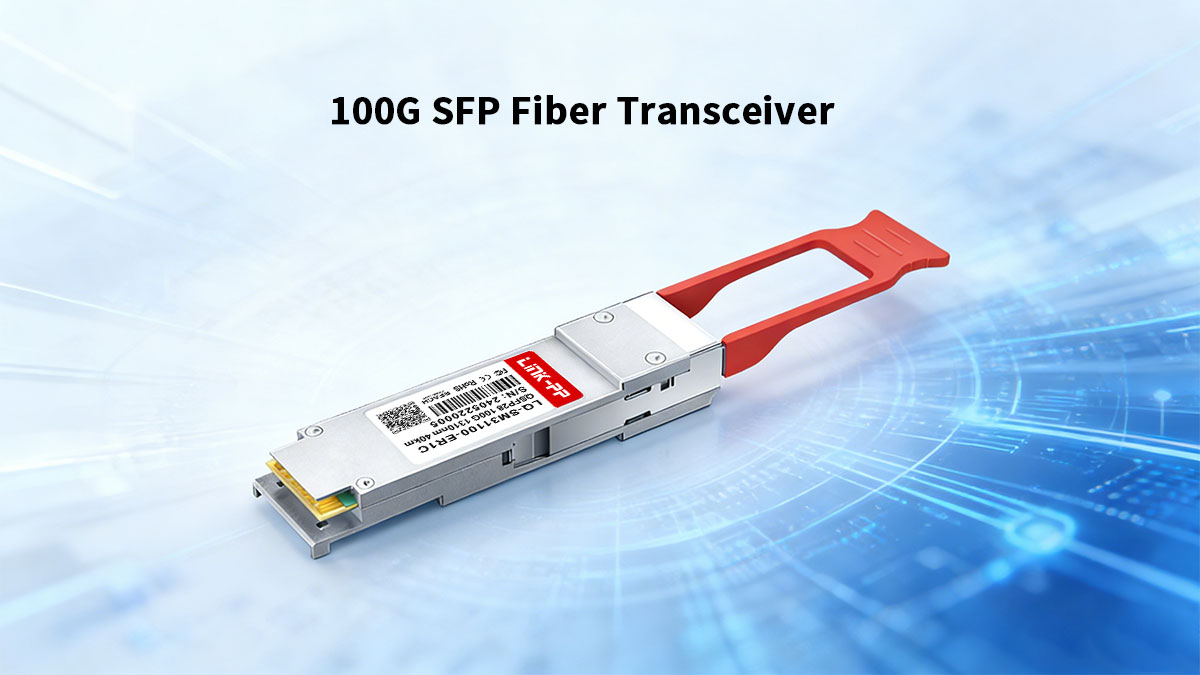
The 100G SFP fiber transceiver represents a critical advancement in optical communication, specifically designed to enable data transmission speeds of 100Gbps over optical fiber. This technology provides high-bandwidth connectivity solutions, making it a key player in modernizing network infrastructure to meet the ever-growing demand for faster and more efficient data transfer.
Definition of 100G SFP
The term "100G SFP" broadly refers to high-speed Small Form-factor Pluggable (SFP) and Quad SFP (QSFP) transceivers supporting 100Gbps Ethernet transmission. This includes SFP-DD (Double Density) modules using 2x50G PAM4 electrical lanes in the compact SFP form factor, as well as QSFP28 modules utilizing 4x25G NRZ lanes in the larger quad-lane form factor.
These modules convert electrical signals from the host device into optical signals for transmission over fiber cables, then perform the reverse process at the receiving end. This electro-optical conversion enables seamless high-speed data transfer between network switches, routers, and servers across diverse architectures.
How 100G SFP Differs from Other Transceivers
The 100G SFP fiber transceiver stands apart from lower-speed transceivers, such as 10G and 40G SFP modules, primarily due to its significantly higher data transmission capabilities. While 10G SFP modules are limited to 10 gigabits per second, respectively, the 100G SFP offers a tenfold increase in bandwidth, enabling faster data transfer and supporting larger volumes of traffic across networks. This is crucial as enterprises and service providers need to accommodate the exponential growth in data usage, especially with the rise of cloud computing, big data analytics, and IoT devices.
Additionally, the 100G SFP utilizes more advanced modulation techniques and optical technologies, allowing it to transmit data efficiently over long distances without the need for excessive signal boosting. For example, while 10G and 40G transceivers may struggle with maintaining signal integrity over long cable runs, the 100G SFP can deliver high-performance connectivity over distances that were previously challenging with older technologies. This capability enables 100G SFP modules to support high-bandwidth applications and large-scale networks, providing businesses with the infrastructure necessary to handle the demands of modern communications.
100G SFP Compatibility and Standards
The 100G SFP is built upon well-established industry standards set by the IEEE 802.3 working group, which governs Ethernet specifications for data transmission and optical communication. Core standards such as 100GBASE SR4, 100GBASE LR4, 100GBASE ER4, 100GBASE PSM4, and 100GBASE CWDM4 define specific parameters including transmission distance, wavelength allocation, fiber type, and connector format. These standards ensure that network architects can deploy 100G solutions tailored precisely to their link budget, distance, and performance requirements without interoperability issues.
Beyond transmission performance, inter-vendor compatibility and system flexibility are guaranteed through the Multi-Source Agreement (MSA) framework. The MSA defines module form factors, electrical interfaces, and signaling protocols to ensure that transceivers from different manufacturers can operate seamlessly in standard-compliant switches, routers, and NICs. Most 100G SFP modules are also backward compatible with legacy 25G infrastructures, provided the host equipment supports matching physical cages and firmware versions. This broad interoperability allows enterprises and data centers to adopt 100G technology incrementally, avoiding costly forklift upgrades while ensuring consistent optical performance and reliability across mixed-vendor environments.
⭐ Why Upgrade to 100G SFP Ethernet Networks
Upgrading to 100G SFP Ethernet networks empowers organizations to keep pace with data-intensive applications while future-proofing their infrastructure. It delivers faster performance, higher capacity, and more efficient connectivity to meet evolving commercial and enterprise demands.
Meet Growing Bandwidth Demands in Modern Networks
As data consumption increases due to cloud services, streaming, and IoT devices, 100G SFP Ethernet networks provide the necessary bandwidth to handle these demands. Upgrading allows businesses to ensure their network infrastructure can support massive data volumes without compromising on performance.
Improve Network Efficiency and Latency Performance
100G SFP modules offer reduced latency and optimized packet processing, crucial for real-time workloads like AI analytics and high-frequency trading. By minimizing data congestion and transmission delays, these modules enable faster response times and smoother data flows across switches and routers, improving overall operational performance.
Achieve Better Energy Efficiency and Port Density
100G SFP transceivers are more energy-efficient than their predecessors, reducing power consumption while maintaining high performance. Also, these transceivers offer better port density, allowing businesses to achieve more throughput per unit of physical space, optimizing both energy and infrastructure.
⭐ What Types of 100g SFP Transceivers Are There
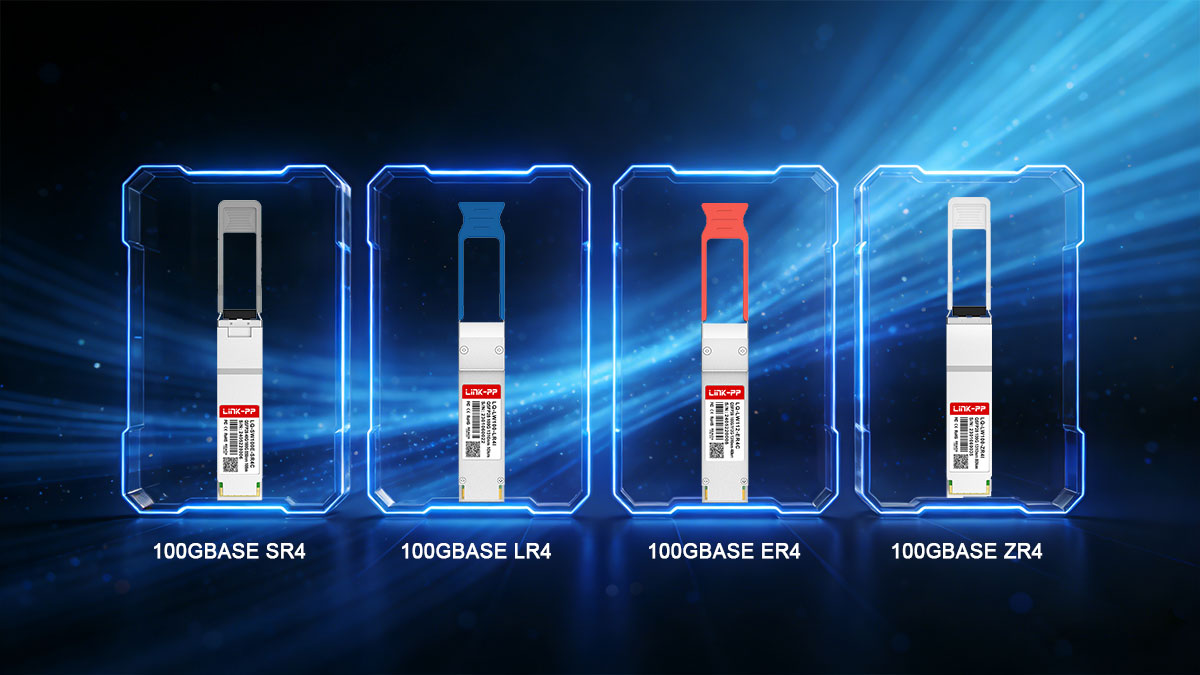
There are several types of 100G SFP transceivers, each tailored to specific networking needs. These transceivers differ in terms of distance, modulation, and application, providing businesses with the flexibility to choose the most suitable option for their commercial network environments.
100GBASE SR4
The 100GBASE SR4 SFP transceiver is specifically designed for short-reach, high-density environments, especially inside data centers. It operates over multimode fiber and uses parallel transmission to achieve 100G bandwidth, making it ideal for switch-to-switch or switch-to-server connections within the same facility.
This type of transceiver is widely adopted in leaf-spine architectures where short cable runs and high port density are required. Its lower cost compared to long-reach modules also makes it attractive for large-scale deployments where distance is not a primary concern.
The key technical specifications of 100GBASE SR4 are summarized in the table below.
| Specification |
100GBASE SR4 |
| Fiber Type |
Multimode Fiber (MMF) |
| Maximum Distance |
70m (OM3); 100m (OM4) |
| Wavelength |
850nm (4 Parallel Lanes) |
| Connector Type |
MTP/MPO-12 |
| Laser Type |
VCSEL |
| Modulation |
NRZ |
| Power Consumption |
≤3.5W |
100GBASE LR4
100GBASE LR4 transceivers are designed for longer transmission distances using single-mode fiber. By leveraging wavelength division multiplexing (WDM), LR4 modules transmit four 25G lanes over a single pair of fibers, enabling efficient long-distance communication up to 10km.
These transceivers are commonly used for inter-building connectivity, enterprise backbone networks, and metro Ethernet links. They offer a balance between reach and cost, making them suitable for scenarios where SR4 cannot meet distance requirements but ultra-long-range optics are unnecessary.
The main technical parameters of 100GBASE LR4 are outlined in the following table.
| Parameter |
100GBASE LR4 |
| Fiber Type |
Single Mode Fiber (OS2) |
| Maximum Distance |
Up to 10km |
| Wavelength |
Four LWDM Wavelengths (1295-1310nm) |
| Connector Type |
Duplex LC |
| Laser Type |
EML |
| Modulation |
NRZ |
| Power Consumption |
≤4.5W |
100GBASE ER4
The 100GBASE ER4 fiber transceiver is built for extended-reach applications where transmission distances exceed standard LR4 capabilities. It supports distances of up to 40km over single-mode fiber, making it suitable for metropolitan area networks and long-haul enterprise connections.
ER4 transceivers typically consume more power and come at a higher cost due to the advanced optical components required for long-distance signal integrity. However, they eliminate the need for intermediate amplification equipment in many scenarios.
Below is a table summarizing the key specifications of 100GBASE ER4.
| Specification |
100GBASE ER4 |
| Fiber Type |
Single Mode Fiber |
| Maximum Distance |
Up to 40km |
| Wavelength |
1310nm |
| Connector Type |
Duplex LC |
| Laser Type |
EML |
| Modulation |
NRZ |
| Power Consumption |
≤5W |
100GBASE ZR4
The 100GBASE ZR4 optical transceiver is designed for long-haul transmission over single-mode fiber, supporting distances of up to 80 km without intermediate amplification. It utilizes coherent optics and dual-polarization quadrature phase-shift keying (DP-QPSK) modulation to deliver high spectral efficiency and maintain robust signal integrity over extended distances.
These modules are primarily deployed in metropolitan and regional optical networks, long-haul data center interconnects (DCI), and carrier backbone links, where maximizing both capacity and reach is essential.
The key technical specifications of 100GBASE ZR4 are summarized below.
| Specification |
100GBASE ZR4 |
| Fiber Type |
Single Mode Fiber |
| Maximum Distance |
Up to 80km |
| Wavelength |
1310nm |
| Connector Type |
Duplex LC |
| Laser Type |
4 x LAN WDM EML |
| Modulation |
Coherent (DP-QPSK) |
100GBASE CWDM4
100GBASE CWDM4 optical transceivers use coarse wavelength division multiplexing to transmit four optical wavelengths over single-mode fiber. Compared to LR4, CWDM4 offers a shorter reach but significantly reduces cost by using wider wavelength spacing and simpler optical components.
These transceivers are well-suited for data center interconnect (DCI) scenarios where distances typically range from several hundred meters to a few kilometers. They provide an efficient compromise between performance and budget, especially for cloud and colocation environments.
The technical characteristics of 100GBASE CWDM4 are shown in the table below.
| Parameter |
100GBASE CWDM4 |
| Fiber Type |
Single Mode Fiber |
| Fiber Count |
2 Fibers |
| Maximum Distance |
Up to 2km |
| Technology |
CWDM (4 wavelengths) |
| Wavelength |
1271nm, 1291nm, 1311nm, 1331nm |
| Connector Type |
Duplex LC |
| Laser Type |
4 x CWDM DML (DFB) |
| Modulation |
NRZ |
| Power Consumption |
≤3.5W |
100GBASE PSM4
100GBASE PSM4 fiber optic transceivers use parallel single-mode fiber to transmit four independent optical lanes simultaneously. Unlike WDM-based solutions, PSM4 relies on multiple fiber pairs, which simplifies optics but increases fiber count requirements.
This type of transceiver is often deployed in hyperscale data centers where fiber infrastructure is abundant, and cost efficiency is a priority. PSM4 modules offer a straightforward and power-efficient approach for medium-distance connections.
The core specifications of 100GBASE PSM4 are provided in the following table.
| Specification |
100GBASE PSM4 |
| Fiber Type |
Single Mode Fiber |
| Fiber Count |
8 Fibers |
| Maximum Distance |
Up to 2km |
| Wavelength |
1310nm |
| Connector Type |
MTP/MPO-12 |
| Laser Type |
DFB |
| Technology |
Parallel Optics (4 lanes) |
⭐ 100G SFP Use Cases in Data Center
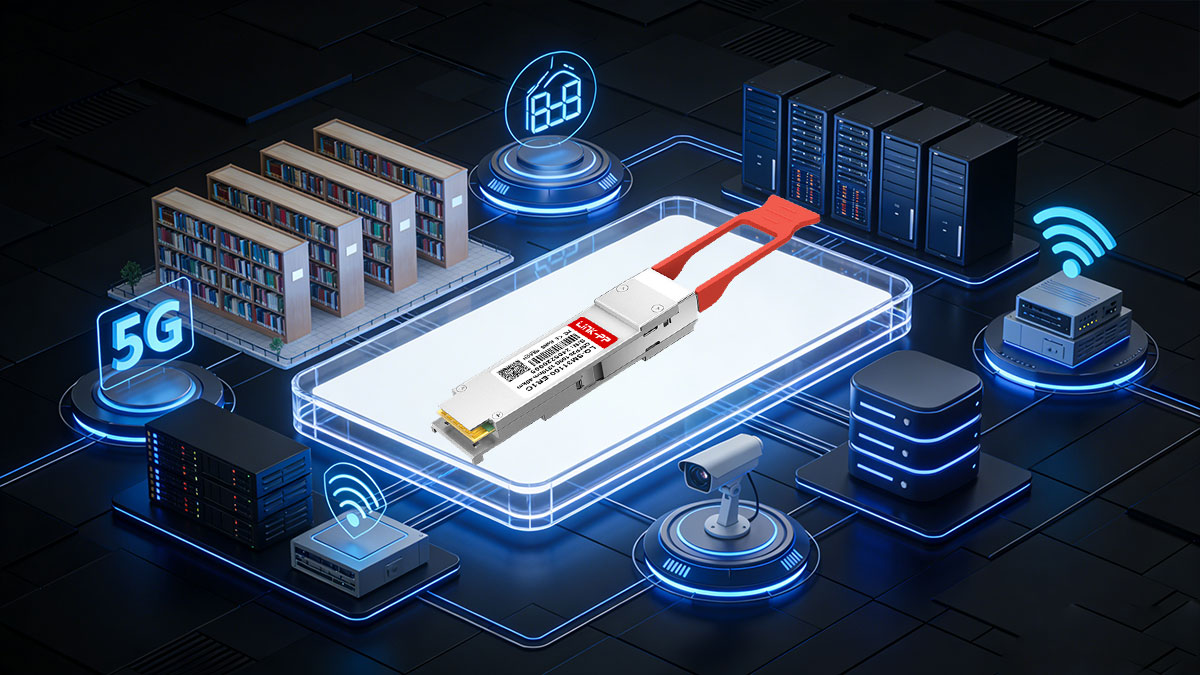
100G SFP modules play a crucial role in data centers by enabling faster, more reliable connections between network devices. They are essential for handling massive data volumes, improving network agility, and supporting scalable architecture for future growth.
Accelerating Server-to-Switch Connectivity
100G SFP modules enable ultra-fast connections between servers and top-of-rack switches, reducing bottlenecks in high-performance computing environments. Their low latency and high throughput ensure seamless data flow for virtualization, big data analytics, and AI workloads that demand extremely responsive network performance.
Building High-Capacity Data Center Fabrics
Within the spine-leaf architecture, 100G SFP transceivers deliver the bandwidth required for consistent east-west traffic flow between switches. They help build scalable and resilient network fabrics, allowing data centers to increase capacity and ensure efficient load balancing across multiple links with minimal packet loss.
Enhancing Storage and Backup Network Performance
100G SFP solutions greatly improve data transfer speeds within storage area networks, reducing backup windows and accelerating data replication. Their reliability ensures continuous access to mission-critical data, making them ideal for environments that rely on fast storage synchronization, such as financial trading or cloud backup systems.
⭐ 100G SFP Deployment in Enterprise Networks
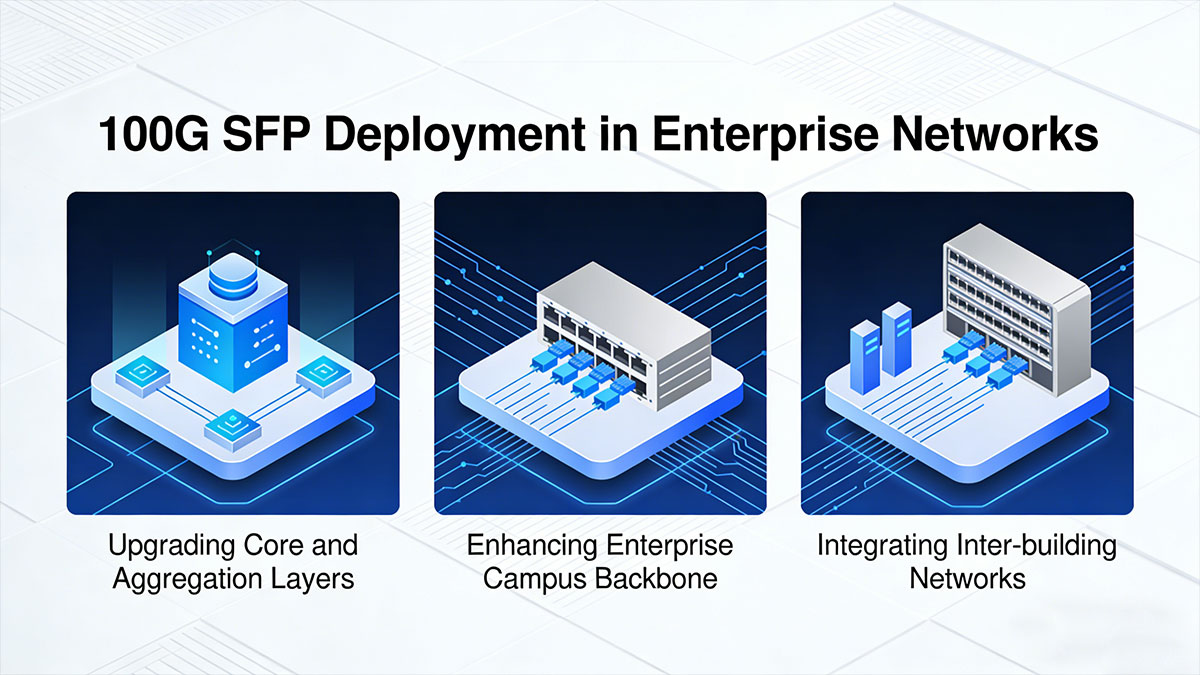
Deploying 100G SFP transceivers in enterprise networks ensures a scalable, high-performance infrastructure ready for future traffic demands. These deployments enhance backbone capacity, minimize latency, and strengthen connectivity between key network layers and buildings.
Upgrading Core and Aggregation Layers
Upgrading to 100G SFP transceivers at the core and aggregation layers enables enterprises to handle higher data throughput and interconnect high-density switches more efficiently. This upgrade supports intensive workloads from virtualization, video conferencing, and analytics applications, ensuring greater reliability and bandwidth for mission-critical business operations.
Enhancing Enterprise Campus Backbone
For campus backbones, 100G SFP links enable high-capacity interconnection between distribution switches and core nodes, especially in multi-building campuses. They ensure stable performance for Wi-Fi 6/6E access growth, unified communications, and video conferencing, while reducing fiber runs compared with parallel lower-speed uplinks.
Integrating Inter-building Networks
100G SFP transceivers streamline inter-building connectivity by providing high-speed optical links over single-mode or multimode fiber. This allows enterprises to connect distant offices or departments with consistent bandwidth and minimal signal loss, supporting data-heavy applications such as centralized cloud storage, real-time collaboration, and video surveillance systems.
⭐ 100G SFP Applications in Cloud and 5G Infrastructure
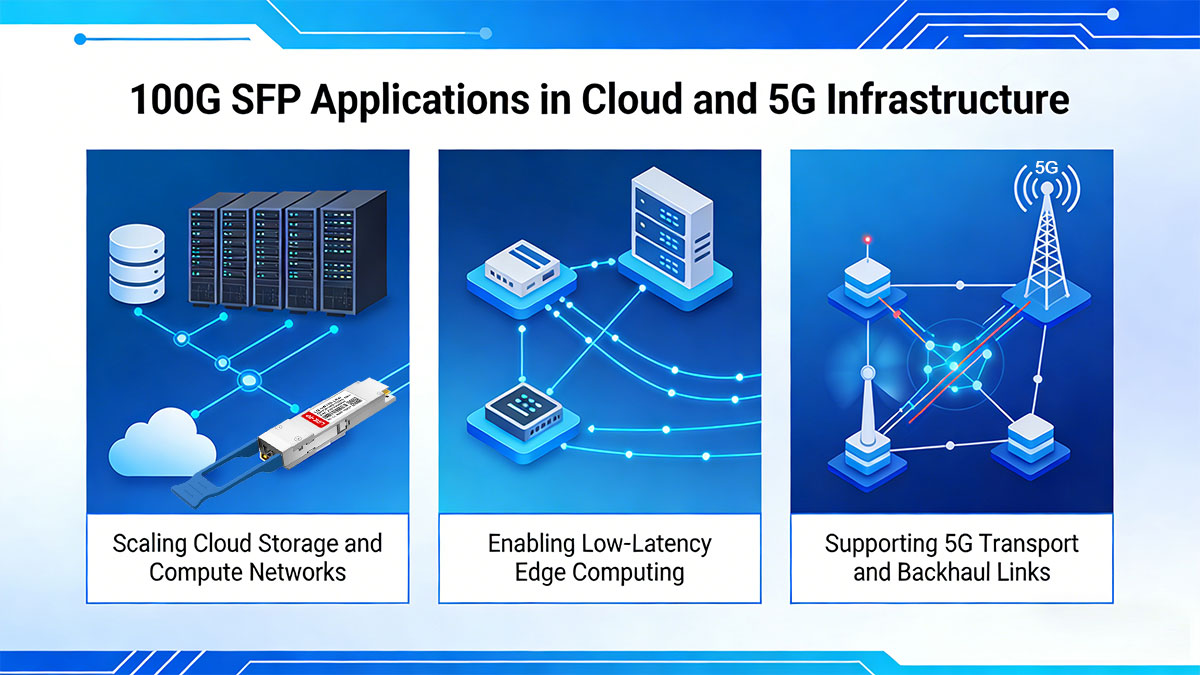
100G SFP transceivers are also essential for powering next-generation cloud computing and 5G connectivity. They deliver the high-speed, low-latency links required to connect distributed workloads, edge resources, and virtualized environments in a scalable, energy-efficient way.
Scaling Cloud Storage and Compute Networks
100G SFP transceivers enable hyperscale cloud data centers to interconnect high-performance storage arrays and compute clusters seamlessly. Their high bandwidth supports multi-tenant workloads and distributed parallel processing, ensuring smooth virtual machine migration and faster data access across geographically dispersed cloud nodes.
Enabling Low-Latency Edge Computing
In edge environments, 100G SFP modules minimize transmission delays between micro data centers and user devices. This capability is critical for latency-sensitive applications such as real-time analytics, industrial automation, and autonomous systems, where milliseconds directly impact service quality and operational outcomes.
Supporting 5G Transport and Backhaul Links
100G SFP solutions form the backbone of 5G transport networks, delivering the capacity needed for dense small-cell deployments and massive MIMO configurations. Their optical performance ensures stable fronthaul and backhaul connectivity between baseband units and core networks, supporting high throughput and ultra-reliable 5G services.
⭐ How to Choose the Right 100G SFP for Commercial Ethernet Network
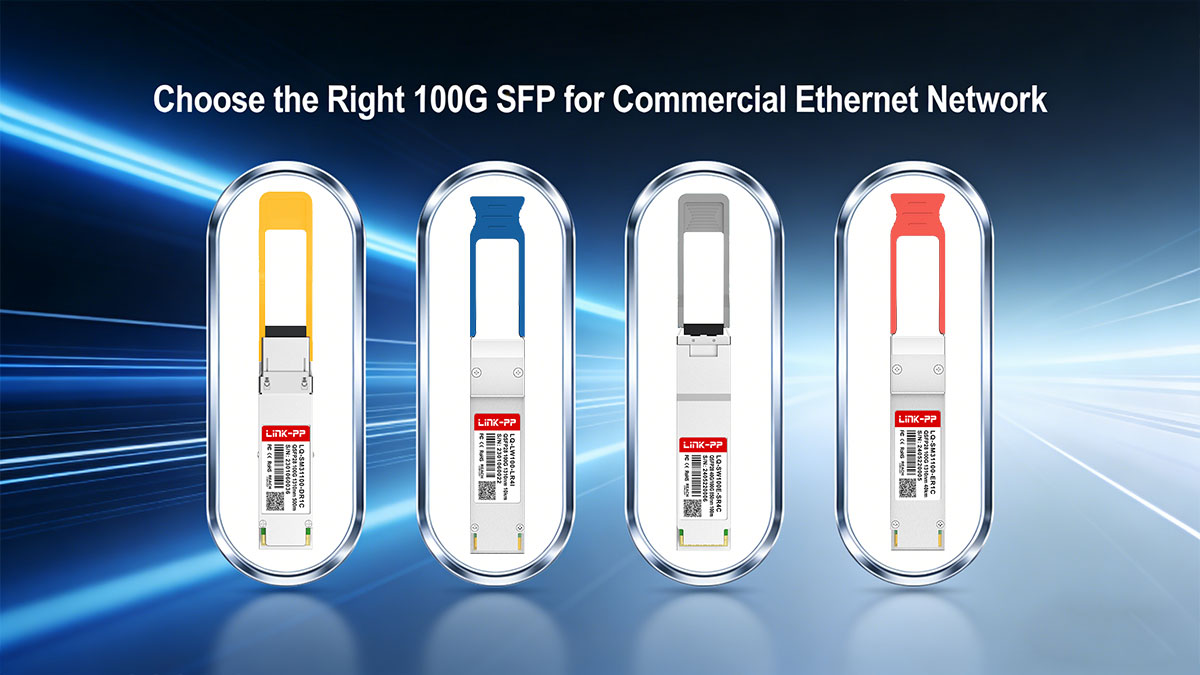
Choosing the right 100G SFP fiber transceiver is crucial for optimizing network performance while maintaining cost-effectiveness in a commercial Ethernet environment. Considerations such as distance, compatibility, power consumption, and performance requirements will guide you in selecting the best 100G SFP module for your specific needs.
Assessing Distance Requirements and Fiber Type
Begin by evaluating the physical distance between network endpoints and the type of fiber cabling in place. Short-reach connections within a rack or data hall typically use 100GBASE SR4 transceivers with OM3/OM4 multimode fiber, supporting up to 70-100m. For campus or metro-area links, 100GBASE LR4 or 100GBASE CWDM4 models over single-mode fiber (SMF) handle 2km to 10km distances. Where ultra-long reach is required — up to 40km or more — 100GBASE ER4 transceivers are optimal. Matching the transceiver standard to your cabling type and link distance prevents signal loss, lowers latency, and avoids unnecessary upgrades.
Ensuring Switch and Router Compatibility
Before selecting a 100G SFP, it's essential to ensure that your network switches and routers are compatible with the transceiver type you choose. Different devices may support different 100G standards, so cross-checking the specifications of your network equipment with the SFP’s requirements is vital to avoid performance issues or incompatibilities. Compatibility with the switch’s form factor (QSFP28, SFP28, etc.) and signaling (like Ethernet or fiber channel protocols) is a key consideration for seamless integration.
Evaluating Power Consumption and Thermal Management
100G transceivers can draw between 2.5W and 5W per port, depending on type or technology (e.g. PAM4 vs NRZ). In dense switch environments, high power modules increase thermal load, impacting cooling efficiency and equipment lifespan. When planning large-scale deployments, prioritize energy-efficient designs such as CWDM4 or PSM4 modules, and ensure adequate airflow or heat dissipation. Monitoring junction temperature and power budgets maintains optimal performance under continuous load.
Balancing Performance Needs with Budget Constraints
While 100G SFP transceivers offer excellent performance, they can come at a premium price. Therefore, it's crucial to balance the performance requirements of your network with your budget. For example, if you only need to support shorter transmission distances, opting for a more affordable transceiver like the 100GBASE SR4 may be ideal. On the other hand, if your network demands high capacity and long-range connections, investing in a 100GBASE LR4 or 100GBASE ER4 transceiver might be more appropriate despite the higher upfront cost.
⭐ FAQs: Answering Questions About 100G SFP
What is the difference between 100GBASE ER4 and 100GBASE ZR4?
100GBASE ER4 supports transmission up to 40km over single mode fiber using LAN-WDM, mainly for metro networks. 100GBASE ZR4 extends reach to 80km, requires higher optical power and stricter dispersion control, and is designed for long-haul or inter-city data center connections.
Can I use 100GBASE LR4 with OM3 fiber?
No. 100GBASE LR4 is designed for single mode fiber (OS2) and operates at 1310nm. OM3 is multimode fiber optimized for 850nm wavelengths. Using LR4 modules on OM3 will result in excessive loss and unstable links, potentially causing link failure.
What are the benefits of using a 100GBASE CWDM4 SFP transceiver?
100GBASE CWDM4 offers a cost-effective alternative to LR4 by using four CWDM wavelengths over single mode fiber up to 2km. It consumes less power, has simpler optics, and is ideal for data center interconnects requiring moderate reach at lower overall deployment cost.
Why is power consumption important for 100G SFP transceivers?
Power consumption directly impacts switch thermal load and data center cooling requirements. Lower-power 100G SFP transceivers allow higher port density, reduce heat generation, and improve long-term operational efficiency, especially in large-scale deployments where hundreds of modules operate simultaneously.
Are third-party 100G SFP transceivers compatible with major switch brands like Cisco or Juniper?
Yes, many third-party 100G SFP transceivers like LINK-PP are fully compatible when properly coded to match vendor specifications. These high-quality SFP modules are tested for firmware interoperability and performance, offering comparable performance at a significantly lower cost than OEM-branded transceivers.
⭐ Conclusion: Ready to Upgrade Your Commercial Ethernet Network?
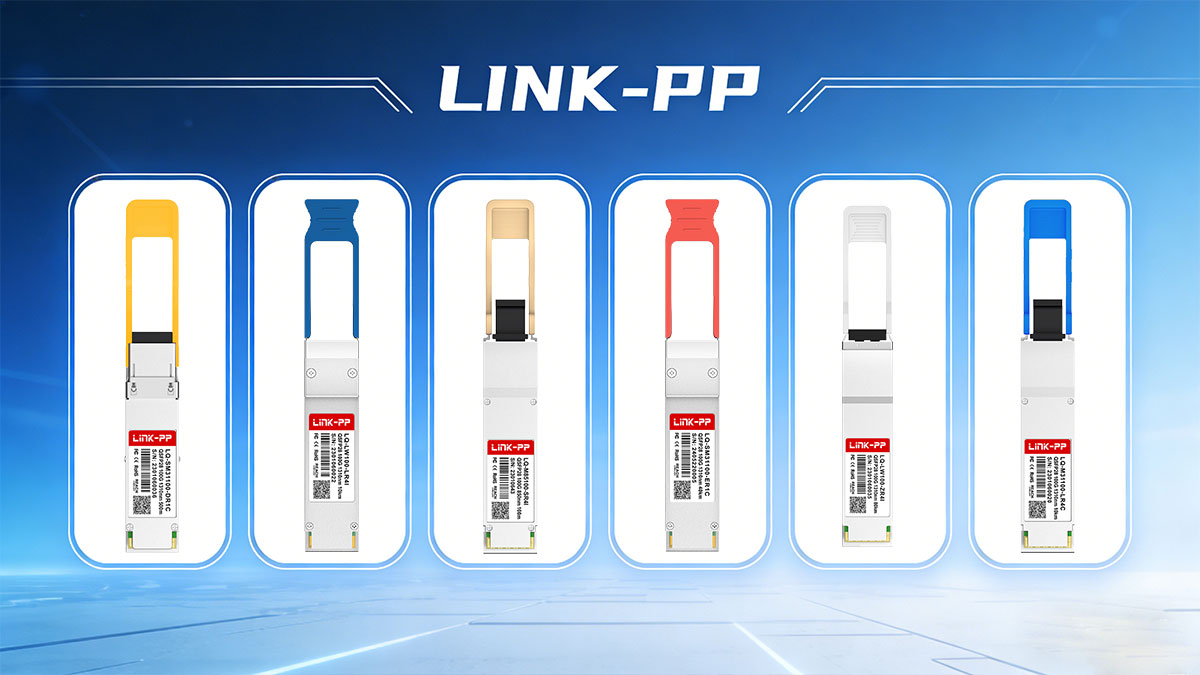
As data traffic continues to surge across enterprise, data center, cloud, and 5G environments, upgrading to a 100G SFP fiber transceiver is no longer just a performance enhancement—it’s a strategic investment in network longevity and competitiveness. With advantages ranging from massive bandwidth gains and lower latency to improved energy efficiency and scalability, 100G SFP solutions provide the foundation needed to support modern workloads such as cloud computing, AI analytics, edge applications, and high-density data center architectures. By selecting the right 100G SFP type based on distance, fiber infrastructure, and budget, organizations can achieve a future-ready Ethernet network that grows seamlessly with business demands.
Now is the ideal time to take the next step toward a faster, more resilient commercial Ethernet infrastructure. Whether you are planning a data center refresh, upgrading an enterprise backbone, or expanding cloud and 5G transport capacity, reliable and standards-compliant 100G SFP transceivers are essential. Explore high-quality, cost-effective 100G SFP solutions and get technical support by visiting the LINK-PP Official Store, and discover how LINK-PP SFP transceivers can help you confidently upgrade your commercial Ethernet network.