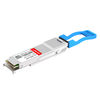
In modern enterprise and service provider networks, reliable Gigabit Ethernet connectivity over fiber is a foundational requirement. As network infrastructures continue to expand across campuses, data centers, and metropolitan areas, optical transceivers play a critical role in ensuring stable, long-distance, and high-performance data transmission. Among Cisco’s widely adopted fiber modules, Cisco GLC-LH-SMD has become a popular choice for 1G optical networking deployments.
The Cisco GLC-LH-SMD SFP transceiver is designed to deliver flexible fiber connectivity, supporting both single-mode and multimode fiber while maintaining compatibility across a wide range of Cisco switches and routers. Its combination of long transmission reach, robust performance, and Digital Optical Monitoring capabilities makes Cisco GLC-LH-SMD a key component in scalable and efficient network designs.
However, as enterprises look to optimize network expansion costs while maintaining the same level of performance and compatibility, Cisco GLC-LH-SMD compatible SFP modules have gained increasing attention. These third-party alternatives are engineered to meet the same optical specifications and interoperability standards as the original Cisco module, offering a practical and budget-friendly option for network planners seeking reliable Gigabit Ethernet fiber connectivity without compromising network stability.
🌔 What Is Cisco GLC-LH-SMD
Cisco GLC-LH-SMD is a Gigabit Ethernet SFP optical transceiver that supports long-distance fiber connections and enhanced monitoring features. It is commonly used in enterprise, campus, and service provider networks that require stable 1G fiber links with broad compatibility.
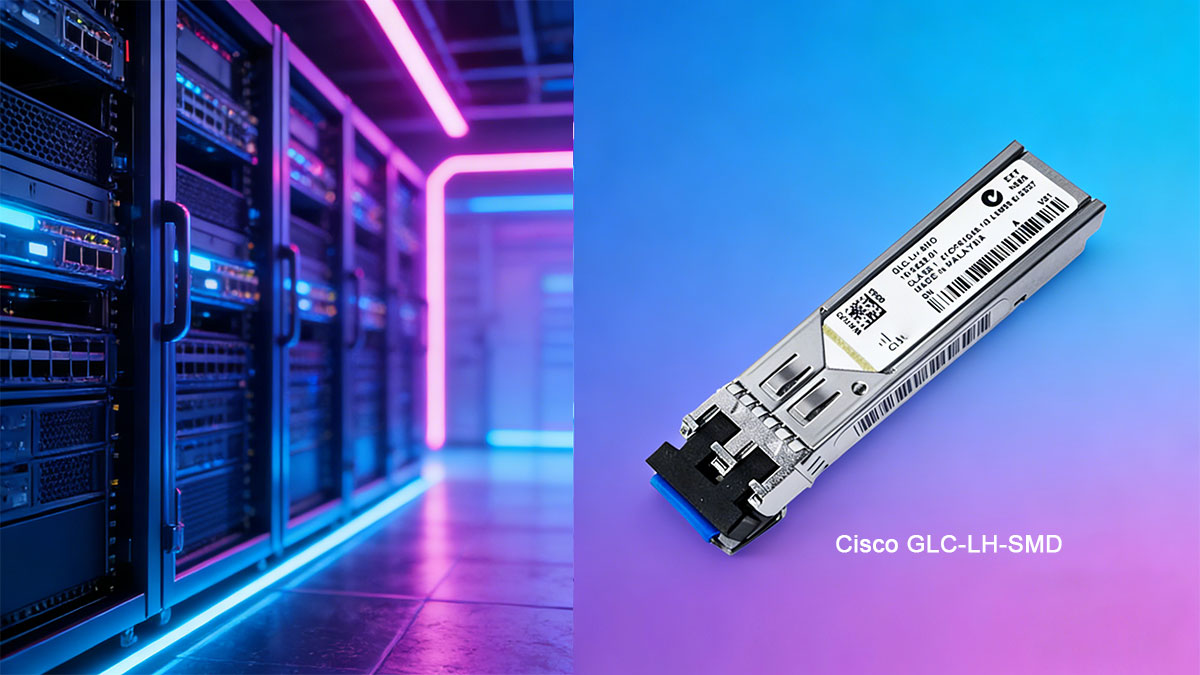
Cisco GLC-LH-SMD SFP Transceiver Basic Introduction
The Cisco GLC-LH-SMD is a 1000BASE-LX/LH optics transceiver operating at a wavelength of 1310nm. It is designed for Gigabit Ethernet applications and supports hot-swappable installation, allowing network administrators to deploy or replace modules without interrupting system operation.
This 1Gb SFP module supports both single-mode fiber (SMF) and multimode fiber (MMF), providing flexibility in various network environments. Compared to earlier versions, the “SMD” designation indicates support for Digital Monitoring (DOM/DDM), enabling real-time visibility into optical performance parameters.
Technical Specifications of Cisco GLC-LH-SMD Module
The Cisco GLC-LH-SMD module offers standardized optical and electrical characteristics for reliable 1G fiber transmission:
- Data Rate: 1.25Gbps (Gigabit Ethernet)
- Wavelength: 1310nm
- Maximum Transmission Distance: Up to 10km over single-mode fiber; Up to 550m over multimode fiber (with mode conditioning patch cable if required)
- Connector Type: Duplex LC
- DOM/DDM: Support (for real-time monitoring of laser bias current, receiver power, transmitter power, operating temperature, and supply voltage.)
These specifications enable the Cisco GLC-LH-SMD optical module to maintain consistent performance across a range of environments, from enterprise data centers to industrial installations.
Cisco GLC-LH-SMD SFP Module Deployment Scenarios
The Cisco GLC-LH-SMD SFP module is designed for flexible Gigabit Ethernet fiber deployments across multiple network environments. Its long transmission reach, dual fiber support, and DOM functionality make it suitable for the following scenarios:
Enterprise Campus Networks
Used for fiber uplinks between access, aggregation, and core switches. Ideal for inter-building connections where distances exceed copper limitations, supporting up to 10km over single-mode fiber for stable and secure campus-wide connectivity.
Data Center Access and Aggregation Layers
Commonly deployed to connect top-of-rack (ToR) or end-of-row (EoR) switches to aggregation switches. The hot-swappable SFP form factor enables fast provisioning and replacement, while DOM helps monitor link health and optical power levels.
Metropolitan Area Networks (MANs)
Suitable for point-to-point Gigabit Ethernet links between network nodes across urban areas. The extended reach over single-mode fiber ensures reliable performance for long-distance connections.
Service Provider Access Networks
Used to connect central offices with remote sites or customer premises equipment (CPE). Provides consistent 1G connectivity for access and aggregation links requiring high reliability.
🌔 Cisco GLC-LH-SMD vs GLC-LH-SM: What’s the Difference
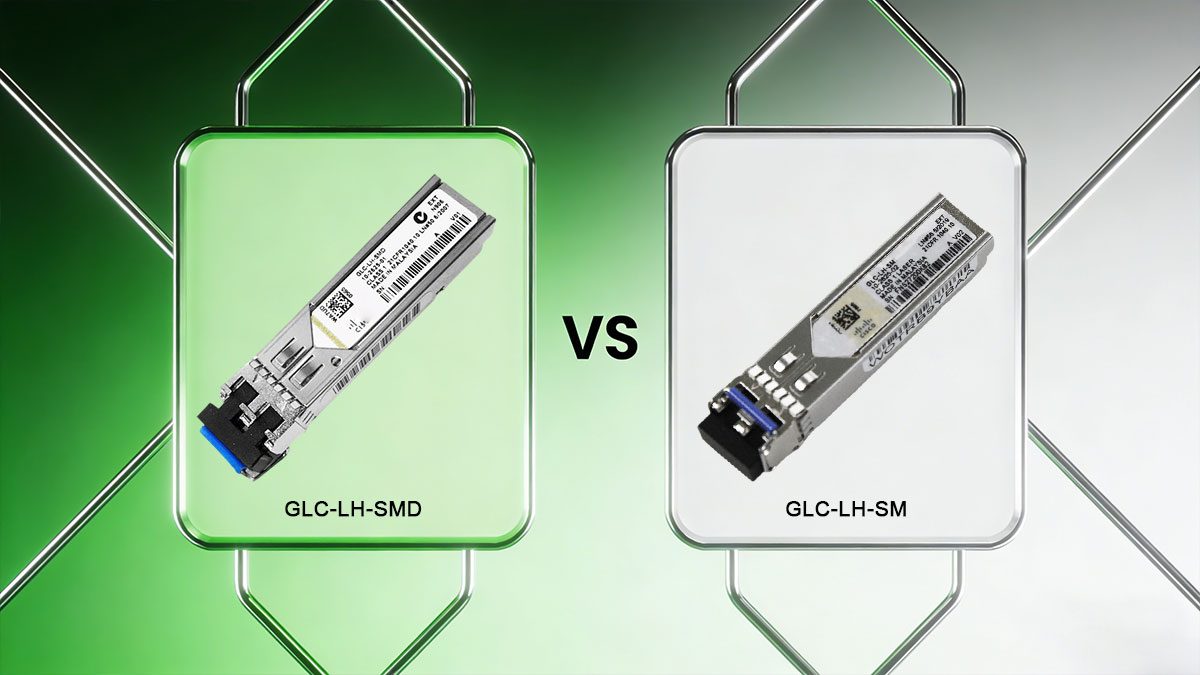
Cisco GLC-LH-SMD and GLC-LH-SM modules both support 1000BASE-LX/LH over 1310nm and are commonly deployed for campus and data center uplinks. However, GLC-LH-SMD is typically favored when you need Digital Optical Monitoring (DOM/DDM) and more flexible use across mixed fiber environments, while GLC-LH-SM is often seen as the more basic long-haul 1G option.
Key Differences at a Glance
| Feature |
Cisco GLC-LH-SM |
Cisco GLC-LH-SMD |
| Standard |
1000BASE-LX/LH |
1000BASE-LX/LH |
| Nominal Wavelength |
1310nm |
1310nm |
| Typical Max Distance (SMF) |
Up to 10km |
Up to 10km |
| Multimode Fiber Support |
Supported with proper cabling |
Optimized for SMF and MMF usage |
| Digital Optical Monitoring (DOM) |
Not support |
Support |
| Monitoring and Troubleshooting |
Basic (interface counters, alarms) |
Advanced (Tx/Rx power, temp, voltage, etc.) |
| Use Cases |
Standard 1G long-reach links |
1G links needing monitoring and flexibility |
Optical Specifications and Performance Comparison
From an optical performance perspective, GLC-LH-SM and GLC-LH-SMD deliver nearly identical transmission capabilities. Both modules operate at a wavelength of 1310nm and support Gigabit Ethernet links over distances of up to 10km on single-mode fiber. When deployed over multimode fiber, both typically require a mode conditioning patch cable to ensure signal integrity.
In real-world deployments, there is no measurable difference in bandwidth, latency, or link stability between the two modules under normal operating conditions. Their core optical specifications are aligned with the same IEEE standards, making them functionally equivalent in terms of data transmission.
Compatibility and Feature Differences
The primary distinction between the two modules lies in feature support rather than raw performance. The GLC-LH-SM is an earlier-generation module that lacks Digital Optical Monitoring capabilities, offering limited visibility into optical health parameters.
By contrast, GLC-LH-SMD supports DOM/DDM, enabling real-time monitoring of key metrics such as:
- Transceiver Operating Temperature
- Transmit and Receive Optical Power
- Laser Bias Current
- Supply Voltage
This enhanced monitoring allows network administrators to proactively detect signal degradation, simplify troubleshooting, and improve long-term network reliability. As a result, GLC-LH-SMD is generally preferred in environments that require higher operational visibility and proactive maintenance.
GLC-LH-SM vs. GLC-LH-SMD: Which to Choose
When choosing between GLC-LH-SM and GLC-LH-SMD, the decision should be based on network visibility requirements, operational maturity, and long-term maintenance strategy rather than basic optical performance alone.
GLC-LH-SM is typically suited for legacy or static network environments where link conditions are well understood and rarely change. In such deployments, the lack of Digital Optical Monitoring may not pose a significant limitation, especially when centralized monitoring or proactive diagnostics are not critical to daily operations.
On the other hand, GLC-LH-SMD is better aligned with modern network management practices. Its built-in DOM/DDM support provides real-time insight into optical parameters, enabling faster fault isolation, predictive maintenance, and improved service reliability. This makes it particularly valuable in environments where uptime, scalability, and remote troubleshooting are essential, such as enterprise campuses, data centers, and service provider networks.
From a long-term perspective, GLC-LH-SMD also offers greater flexibility for future network upgrades, as monitoring and automation tools increasingly rely on optical diagnostics data. For most new deployments or network expansions, Cisco GLC-LH-SMD is the more practical and future-ready choice, even when both modules deliver similar transmission performance.
🌔 Reasons to Buy Cisco GLC-LH-SMD Compatible SFP Modules
Cisco GLC-LH-SMD compatible SFP modules provide a practical alternative for businesses seeking to strike a balance between performance, compatibility, and cost. They are designed to deliver the same optical functionality as original Cisco modules while offering more flexibility in budgeting and sourcing.
Cost-Effective Alternative to Cisco GLC-LH-SMD
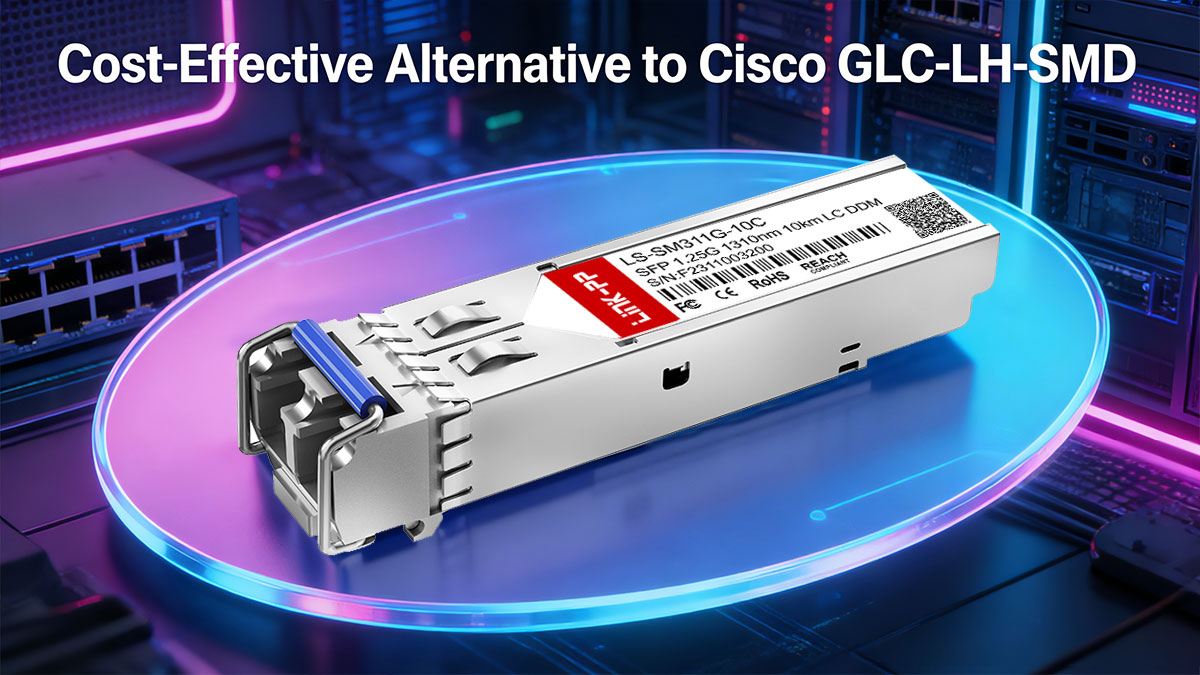
Cisco GLC-LH-SMD compatible modules allow organizations to significantly reduce optics spend while still meeting the same 1G LX/LH functional requirements. By leveraging quality third-party transceivers that follow the same standards and coding profiles, you can equip more ports, build redundancy, or scale out new sites without exceeding project budgets, which is especially valuable in large campus or data center rollouts where optics make up a substantial portion of the hardware cost.
Seamless Compatibility with Cisco Switches
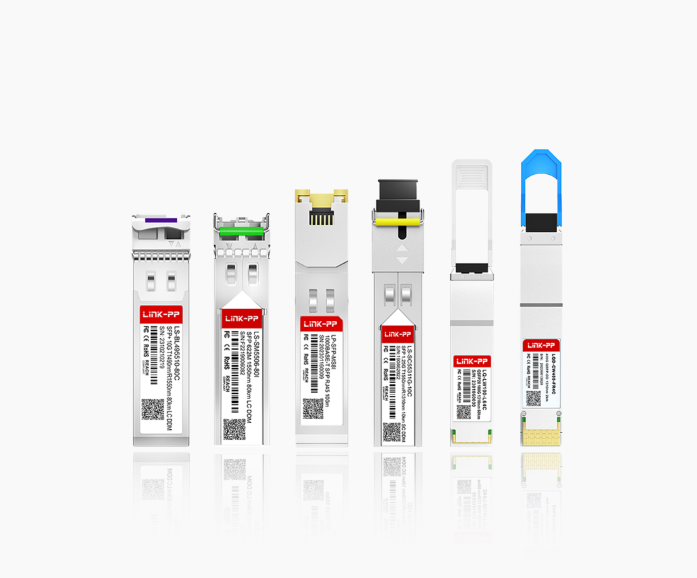
High-quality Cisco GLC-LH-SMD compatible modules (like LINK-PP Cisco compatible SFP ) are engineered to match Cisco’s hardware and software requirements, including proper EEPROM coding and interface recognition. When deployed in supported Cisco switches and routers, these modules are automatically detected and function identically to original transceivers, allowing for smooth integration without additional configuration or compatibility issues.
Enterprise-Grade Performance and Stability
High-quality compatible GLC-LH-SMD modules are built with standards-compliant optics and undergo signal integrity and burn-in testing to ensure stable long-term operation on single-mode and multimode links. When deployed correctly, they deliver consistent link performance, low error rates, and reliable DOM readings, making them suitable for network infrastructures such as enterprise campuses, data centers, and service provider networks where uptime and link stability are critical.
🌔 How to Select Cisco GLC-LH-SMD Compatible Transceivers
Selecting the right Cisco GLC-LH-SMD compatible fiber transceiver requires more than matching basic form factor and speed. Key considerations such as EEPROM coding accuracy, optical specifications, monitoring capabilities, and quality assurance directly impact compatibility, stability, and long-term network performance.
Cisco GLC-LH-SMD EEPROM Coding Requirements
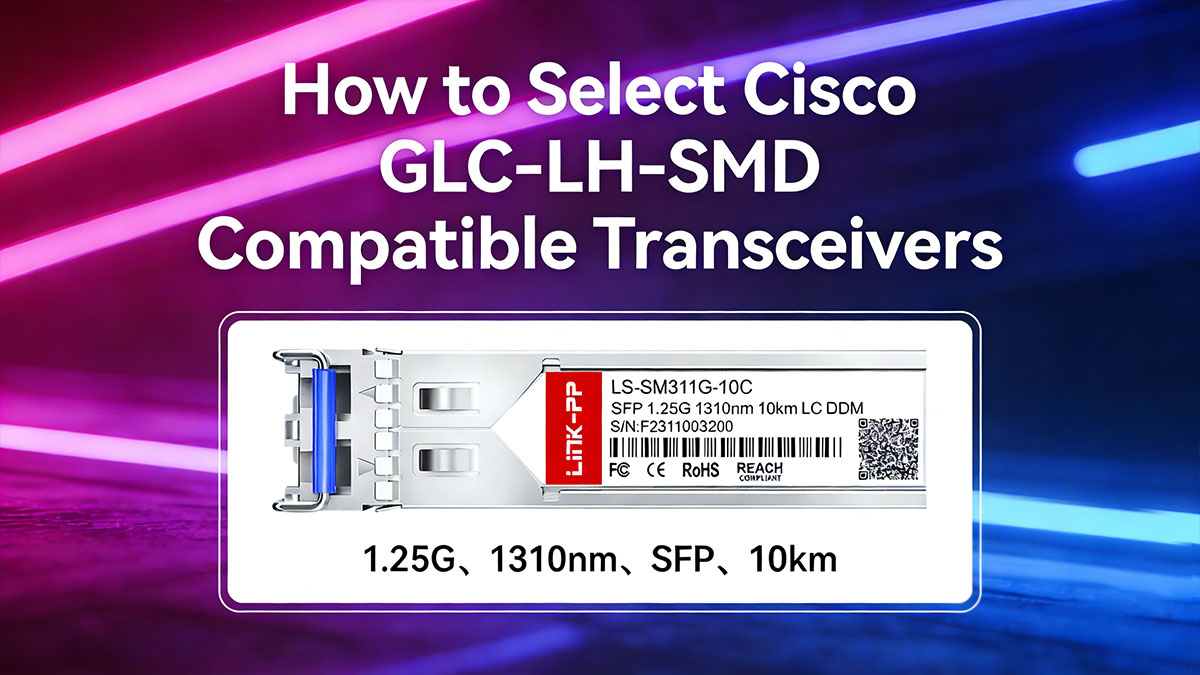
A critical factor when choosing a compatible fiber optic transceiver is proper EEPROM coding that accurately emulates the original Cisco GLC-LH-SMD module. The EEPROM must be programmed to ensure the Cisco switch correctly identifies the transceiver, avoiding “unsupported transceiver” warnings or disabled interfaces. High-quality compatible modules use platform-specific coding that aligns with Cisco’s identification and checksum requirements, ensuring smooth detection across different Cisco switch models and software versions.
Optical Specifications and Fiber Compatibility
The selected compatible SFP transceiver module should strictly adhere to the optical specifications of the original Cisco GLC-LH-SMD, including a 1310nm wavelength, 1.25Gbps data rate, and up to 10km transmission distance over single-mode fiber. Additionally, it should support multimode fiber operation with appropriate mode conditioning patch cables when required. Verifying transmit power, receiver sensitivity, and supported fiber types helps prevent signal loss, link instability, or unexpected distance limitations in real-world deployments.
DOM/DDM Capability and Monitoring Support
Digital Optical Monitoring (DOM/DDM) is an essential feature for modern network operations. When selecting a Cisco GLC-LH-SMD compatible module, confirm that it supports real-time monitoring of parameters such as optical power levels, temperature, and supply voltage. Proper DOM integration allows Cisco switches to report accurate diagnostic data, enabling proactive troubleshooting, performance optimization, and early detection of fiber or transceiver degradation.
Quality, Testing, and Reliability Standards
Reliable Cisco GLC-LH-SMD compatible transceivers should undergo comprehensive testing to ensure consistent performance and interoperability. This includes functional testing on actual Cisco platforms, optical performance validation, and environmental stress testing for temperature and signal stability. Choosing modules that comply with industry standards and are backed by documented quality control processes reduces the risk of premature failure and ensures dependable long-term operation in enterprise and service provider networks.
🌔 How to Verify Cisco GLC-LH-SMD Compatibility Before Deployment
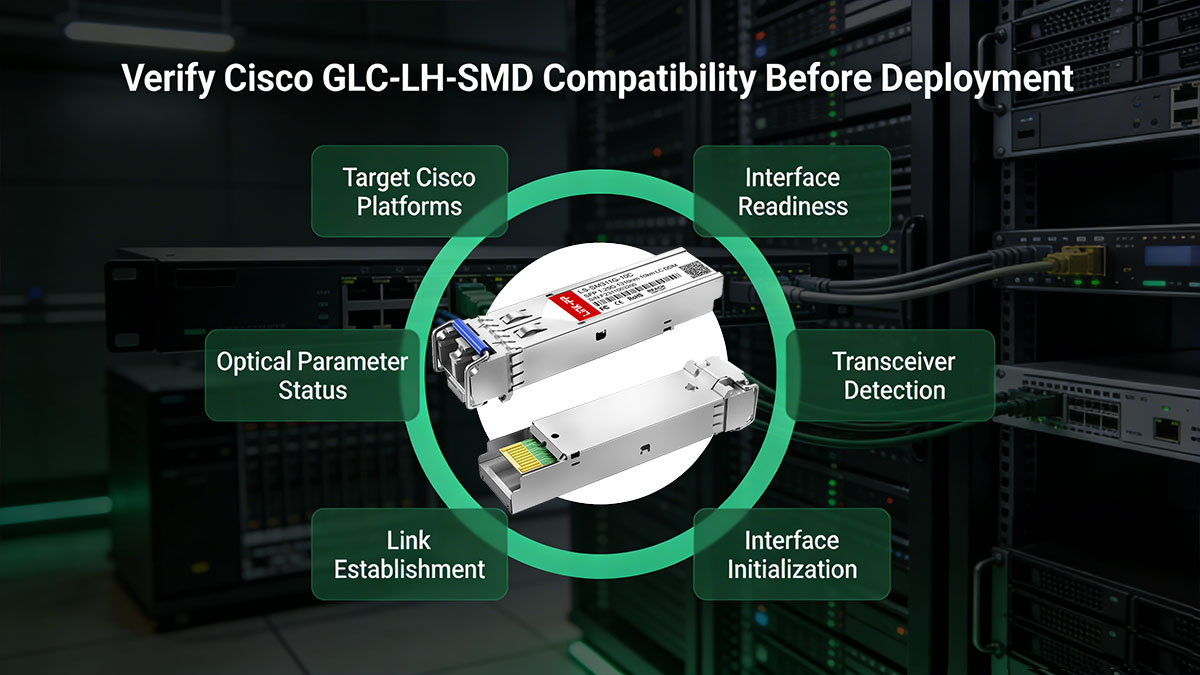
Before deploying a Cisco GLC-LH-SMD compatible transceiver into a production network, it is essential to verify both platform support and operational behavior. Proper pre-deployment validation helps prevent interface shutdowns, compatibility warnings, and unexpected link instability after installation.
Target Cisco Platforms and Interface Readiness
Start by confirming that the target Cisco switch or router model supports 1000BASE-LX/LH SFP modules on the intended interface. Verify that the SFP port is enabled, not administratively shut down, and operating in Gigabit Ethernet mode rather than being forced to an incompatible speed or media type. It is also important to check the device’s operating system version, as older firmware may enforce stricter transceiver validation or lack full DOM support.
Transceiver Detection and Interface Initialization
After inserting a Cisco GLC-LH-SMD compatible SFP module, the switch should immediately begin the transceiver detection process at the hardware level. The device reads the transceiver’s EEPROM information to verify vendor identification, module type, wavelength, and supported standards. A properly coded compatible module will be recognized as a 1000BASE-LX/LH SFP without triggering security or compatibility warnings.
During interface initialization, the port negotiates link parameters and transitions from an inactive to an operational state. The interface should not be placed into an error-disabled or suspended state, and no “unsupported transceiver” or “SFP validation failed” messages should appear in system logs. Successful initialization indicates that the transceiver’s electrical characteristics, EEPROM data, and firmware interaction meet Cisco platform requirements, allowing the interface to proceed to normal link establishment.
Link Establishment and Optical Parameter Status
Once fiber cabling is connected, the interface should complete the physical link handshake and transition to an up/up state within a short period. During this process, verify that the link remains stable without frequent flapping, which may indicate marginal optical power levels, fiber mismatches, or connector issues. Consistent link status confirms that the transmit and receive paths are properly aligned.
After link establishment, review the optical diagnostics reported by the transceiver. Key parameters such as transmit optical power, receive optical power, module temperature, and supply voltage should all fall within the specified operating ranges for Cisco GLC-LH-SMD compatible module. Abnormal readings—such as low receive power, sudden power fluctuations, or elevated temperature—can signal fiber attenuation, excessive link distance, or early-stage transceiver degradation, even if the interface appears operational.
🌔 Troubleshooting Cisco GLC-LH-SMD Compatible SFP Connectivity Issues
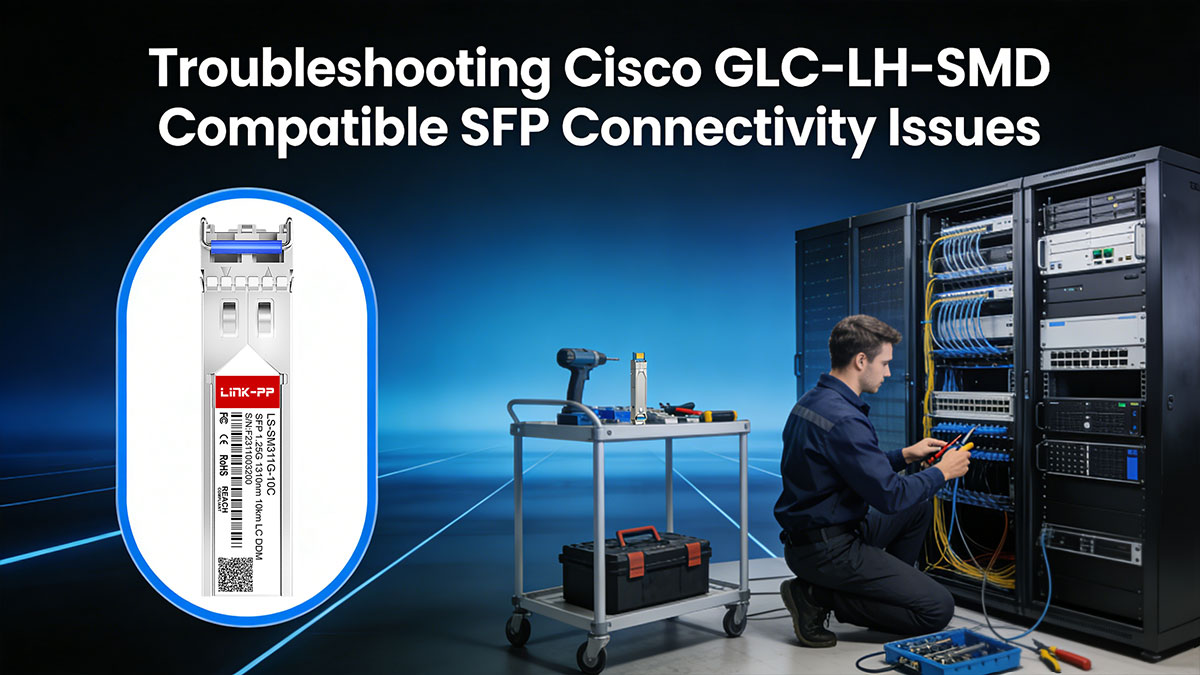
Connectivity issues with Cisco GLC-LH-SMD compatible SFP modules are often related to physical layer conditions, transceiver detection, or configuration mismatches. Systematic troubleshooting helps isolate faults quickly and restore stable Gigabit Ethernet fiber links.
Fiber Cabling and Physical Layer Faults
Physical layer problems are the most common cause of SFP link failures and should be checked first:
- Verify that single-mode or multimode fiber type matches the transceiver and deployment design.
- Ensure LC connectors are clean and free of dust or contamination, as dirty connectors can significantly reduce optical power.
- Confirm correct Tx/Rx polarity, as reversed fiber pairs will prevent link establishment.
- Check fiber length to ensure it does not exceed supported distances (e.g., 10km for single-mode).
- When using multimode fiber, confirm that a mode conditioning patch cable (MCP) is installed if required.
Transceiver Recognition and Interface Errors
If the interface fails to initialize or remains down, transceiver recognition issues may be present:
- Check system logs for messages such as “unsupported transceiver” or EEPROM validation errors.
- Confirm the compatible module is properly EEPROM-coded to emulate Cisco GLC-LH-SMD.
- Reseat the SFP module to ensure full insertion and proper electrical contact.
- Verify that the interface is not placed into an error-disabled state by the system.
Optical Signal Degradation and Diagnostic Alerts
Even when a link is up, degraded optical performance can cause packet loss or instability:
- Review DOM/DDM parameters, including transmit power, receive power, temperature, and voltage.
- Look for low receive power levels, which may indicate excessive fiber attenuation or connector loss.
- Monitor for optical power fluctuations, which can signal fiber bends, aging cables, or unstable transceivers.
- Check for temperature readings outside normal ranges, especially in dense or poorly ventilated switch environments.
- Compare readings on both ends of the link to identify asymmetric signal issues.
Configuration Conflicts and Compatibility Resolutions
Configuration mismatches can prevent successful link operation even when hardware is functional:
- Ensure both ends of the link are configured for Gigabit Ethernet speed and duplex auto-negotiation.
- Verify that the interface is not restricted by manual speed or media-type settings.
- Confirm firmware or IOS versions do not enforce strict third-party transceiver restrictions.
- If needed, apply vendor-recommended settings to allow compatible transceiver operation.
- Restart the interface or reload the module after configuration changes to ensure proper reinitialization.
🌔 Third-Party Alternatives to Cisco GLC-LH-SMD
For users seeking cost-effective yet reliable alternatives for the Cisco GLC-LH-SMD transceiver, third-party SFP modules offer a practical solution. The following transceiver alternatives are designed to deliver comparable performance and interoperability while maintaining compliance with industry standards.
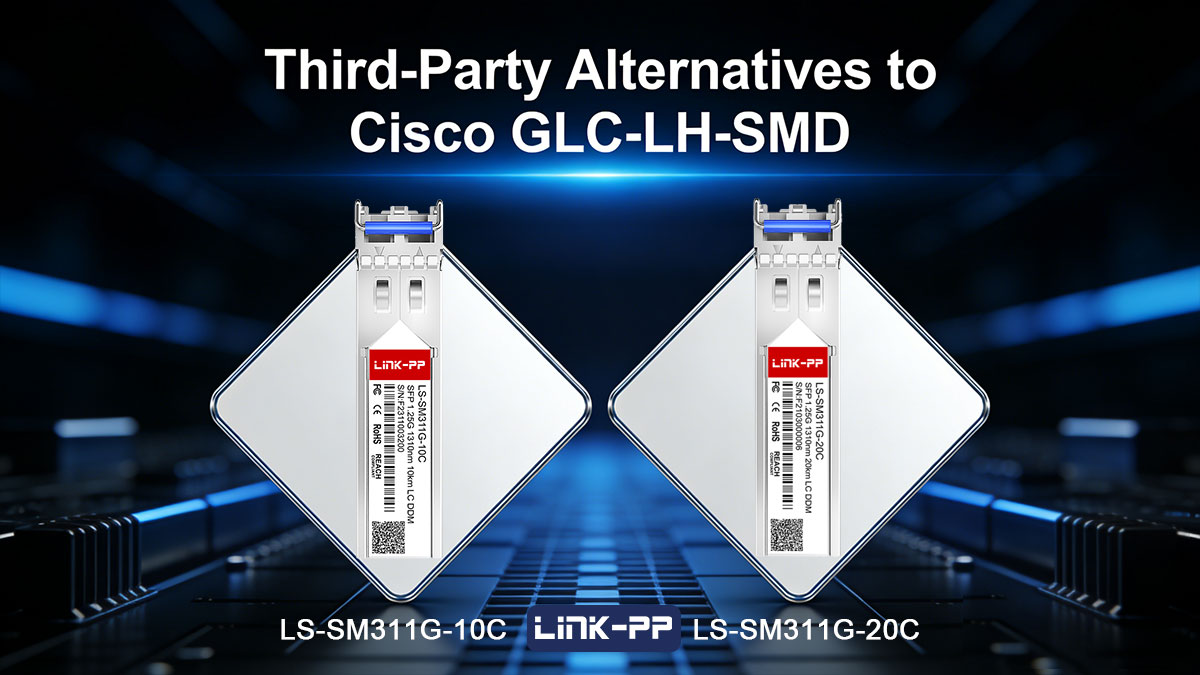
LINK-PP LS-SM311G-10C SFP 1G LX Module
The LINK-PP LS-SM311G-10C is a SFP 1G LX optical transceiver module designed as a direct functional alternative to Cisco GLC-LH-SMD. Operating at a wavelength of 1310nm, it supports stable 1G transmission over single-mode fiber up to 10km, making it suitable for enterprise campus links, access-layer uplinks, and data center interconnections.
The module is fully compliant with IEEE 802.3z and SFP MSA standards and is EEPROM-coded to ensure proper recognition and seamless operation in Cisco switches and routers. Built-in Digital Diagnostic Monitoring (DDM) enables real-time visibility into optical power levels, temperature, and voltage, supporting proactive network maintenance.
The following table summarizes the key technical specifications of the LINK-PP LS-SM311G-10C SFP 1G LX module.
| Parameter |
LS-SM311G-10C SFP 1G LX |
| Max Data Rate |
1.25Gbps |
| Max Cable Distance |
10km |
| Fiber Type |
SMF |
| Connector |
Duplex LC |
| DDM Support |
Yes |
| Optical Component |
FP 1310nm |
| Receiver Sensitivity |
-23dBm |
| Receiver Overload |
-1dBm |
| Protocols |
IEEE 802.3ah-2004, IEEE 802.3z, SFF-8472, SFP MSA (INF-8074i) Compliant |
LINK-PP LS-SM311G-20C 1000BASE LX SFP
The LINK-PP LS-SM311G-20C 1000BASE LX SFP is designed for extended-distance Gigabit Ethernet deployments where standard 10km reach is insufficient. Using a high-quality 1310nm laser optimized for long-haul transmission, this module supports distances of up to 20km over single-mode fiber while maintaining low signal attenuation and stable link performance.
It is also engineered to be fully compatible with Cisco platforms that support GLC-LH-SMD, enabling plug-and-play deployment without triggering transceiver validation errors. With integrated DDM functionality, network administrators can continuously monitor optical parameters, making it well-suited for service provider access networks and enterprise backhaul links.
The table below outlines the main specifications of the LINK-PP LS-SM311G-20C 1000BASE LX SFP module.
| Parameter |
LS-SM311G-20C 1000BASE LX SFP |
| Max Data Rate |
1.25Gbps |
| Max Cable Distance |
20km |
| Fiber Type |
SMF |
| Connector |
Duplex LC |
| DDM Support |
Yes |
| Optical Component |
1310nm FP laser and PIN photo detector |
| TX Power |
-9 to 0dBm |
| RX Power |
-23 to -1dBm |
| Protocols |
SFF-8472 MSA Compliant, IEEE 802.3ah-2004, IEEE 802.3z |
🌔 FAQs About Cisco GLC-LH-SMD Compatibility and Performance
Is the Cisco GLC-LH-SMD compatible module supported on all Cisco switches?
The Cisco GLC-LH-SMD compatible module works with most Cisco switches and routers that support 1G SFP transceivers. However, compatibility may vary depending on the device model and IOS version, so it’s recommended to verify support in the switch’s hardware compatibility list.
Can the Cisco GLC-LH-SMD be used for long-distance connections?
Yes, the Cisco GLC-LH-SMD is designed for long-distance transmission over single-mode fiber, supporting distances of up to 10km. It can also be used over shorter distances with multimode fiber when appropriate mode conditioning cables are applied.
Do Cisco GLC-LH-SMD compatible alternatives support both single-mode and multimode fiber?
Most quality Cisco GLC-LH-SMD compatible alternatives support both single-mode and multimode fiber. Single-mode fiber is preferred for long distances, while multimode fiber is suitable for shorter links with proper configuration.
Do Cisco GLC-LH-SMD compatible modules support DDM?
Yes, many Cisco GLC-LH-SMD compatible modules (such as LINK-PP LS-SM311G-10C and LS-SM311G-20C) support Digital Diagnostic Monitoring (DDM). This feature allows real-time monitoring of parameters such as temperature, voltage, and optical power levels.
Are Cisco GLC-LH-SMD compatible modules tested for interoperability?
Third-party LINK-PP Cisco GLC-LH-SMD compatible modules are typically tested for interoperability with Cisco switches. These tests help ensure stable performance, proper recognition, and seamless integration in Cisco networking environments.
🌔 Final Thoughts on Cisco GLC-LH-SMD Compatible Transceivers
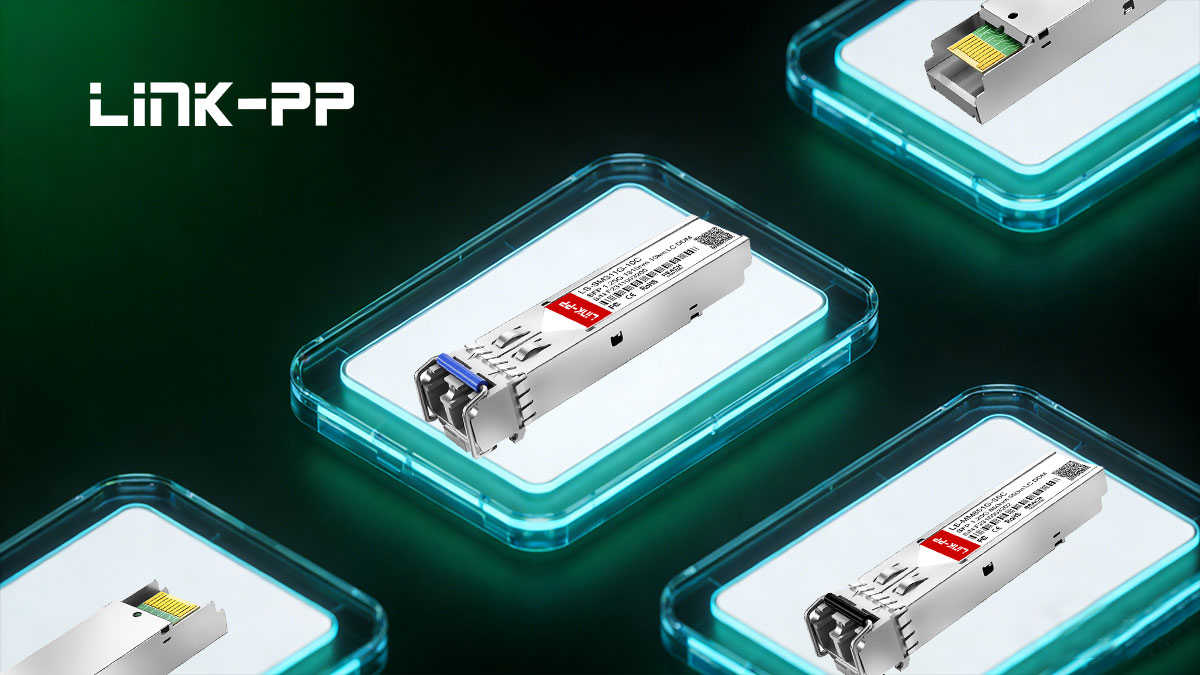
Cisco GLC-LH-SMD compatible transceivers offer a reliable and cost-effective solution for 1G fiber connectivity across a wide range of network environments. With broad Cisco device compatibility, support for long-distance transmission, and features like DDM, they are well-suited for enterprise campus, data center, metropolitan, and service provider networks.
If you’re looking for high-quality, fully tested Cisco GLC-LH-SMD compatible optical modules, explore the LINK-PP Official Store to get quality SFP transceivers backed by strict quality control and fast delivery.